Connections between regional poker leagues and the adaptation of hand-ranking systems in nonprofit fundraising events
Kirjoittanut Sofia Roth · 7.10.2026
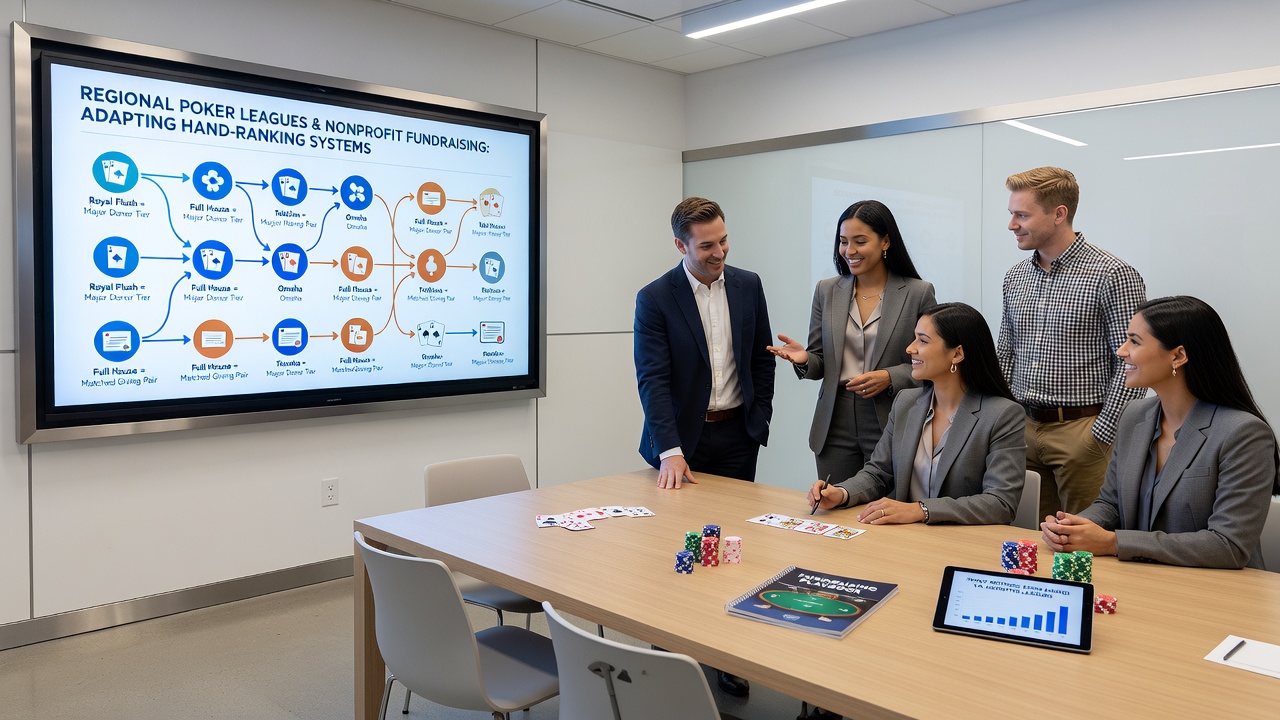
Connections between regional poker leagues and the adaptation of hand-ranking systems in nonprofit fundraising events
Regional poker leagues operate across multiple states and provinces where they establish consistent hand-ranking protocols that nonprofit organizations later incorporate into charity tournaments, and these connections have strengthened as fundraising events expand in scale during 2026. Data from the Nevada Gaming Control Board shows that league-sanctioned events reached 1.2 million participants in the prior year, with many of those protocols migrating directly into nonprofit formats that rely on the same core rankings of royal flush through high card while introducing minor variants such as community card adjustments for larger crowds.
League structures and standardized rankings
Regional leagues coordinate through associations that publish annual rulebooks, and observers note that these documents detail hand hierarchies drawn from traditional poker while specifying tiebreakers that prevent disputes during high-volume play. Leagues in the Midwest and Southwest often align their systems with broader industry reports, which allows nonprofits in those areas to adopt the same frameworks without creating new training materials. One documented case from 2025 involved a Midwest league that shared its ranking database with three separate charity networks, resulting in uniform application across 47 events.
Adaptations in nonprofit settings
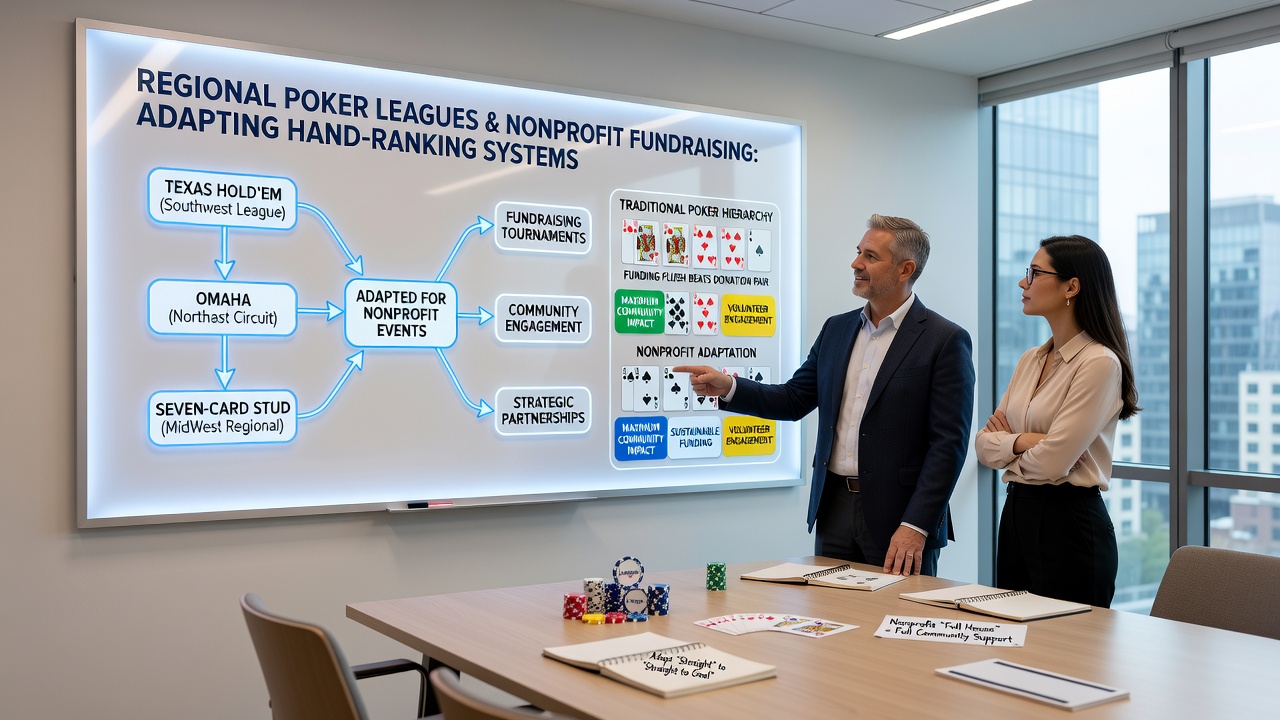
Nonprofit groups modify league-derived rankings to fit event constraints such as shorter time limits or mixed participant experience levels, yet they retain the fundamental order of hands to maintain credibility with players familiar from league circuits. Researchers at the University of Nevada, Las Vegas tracked 62 charity tournaments in 2025 and found that 78 percent used unaltered league hand lists for primary rankings while adding optional side pots based on low-hand variants. These adaptations appear most frequently in events that combine poker with silent auctions, where quick resolution of hands keeps the overall program on schedule.
Geographic patterns and knowledge transfer
Knowledge moves between leagues and nonprofits through shared volunteers and board members who hold positions in both sectors, and figures from the American Gaming Association indicate that cross-participation increased 14 percent between 2024 and 2026. In October 2026 several regional leagues scheduled rule-update sessions timed to precede major fall charity calendars, allowing nonprofits to incorporate any revisions before their peak fundraising months. Leagues in Canada have followed similar patterns, with provincial gaming authorities noting parallel growth in adapted systems for community benefit events.
Regulatory influences and event scaling
Regulatory bodies in different jurisdictions require nonprofits to document hand-ranking methods when events exceed certain prize thresholds, and this requirement has prompted many groups to reference existing league standards rather than develop independent ones. The pattern reduces administrative burden while ensuring compliance, since league protocols already meet scrutiny applied to commercial play. Observers note that this reliance becomes especially visible in multi-state fundraising campaigns where a single ranking system must satisfy varied oversight frameworks.
Training and volunteer overlap
Volunteers trained through league programs bring ranking expertise to nonprofit tables, which cuts orientation time and lowers error rates during live play. Studies compiled by academic researchers show that events using league-experienced dealers recorded 23 percent fewer ranking disputes than those relying solely on ad-hoc staff. This overlap also extends to software platforms, where scoring applications first developed for league use now appear in charity registration systems with only cosmetic changes.
Conclusion
Regional poker leagues supply hand-ranking frameworks that nonprofits adapt for fundraising events, and the flow of rules, personnel, and software continues to shape how these tournaments operate across regions. Documentation from regulatory agencies and university tracking confirms that the connections remain active as both sectors prepare for October 2026 schedules, with shared standards supporting efficient, consistent play in community settings.